
What in-service cleaning is
Every storage tank collects sediment. It holds bacteria, uses up chlorine residual, and gets stirred back into the system when levels drop. Removing it is routine maintenance.
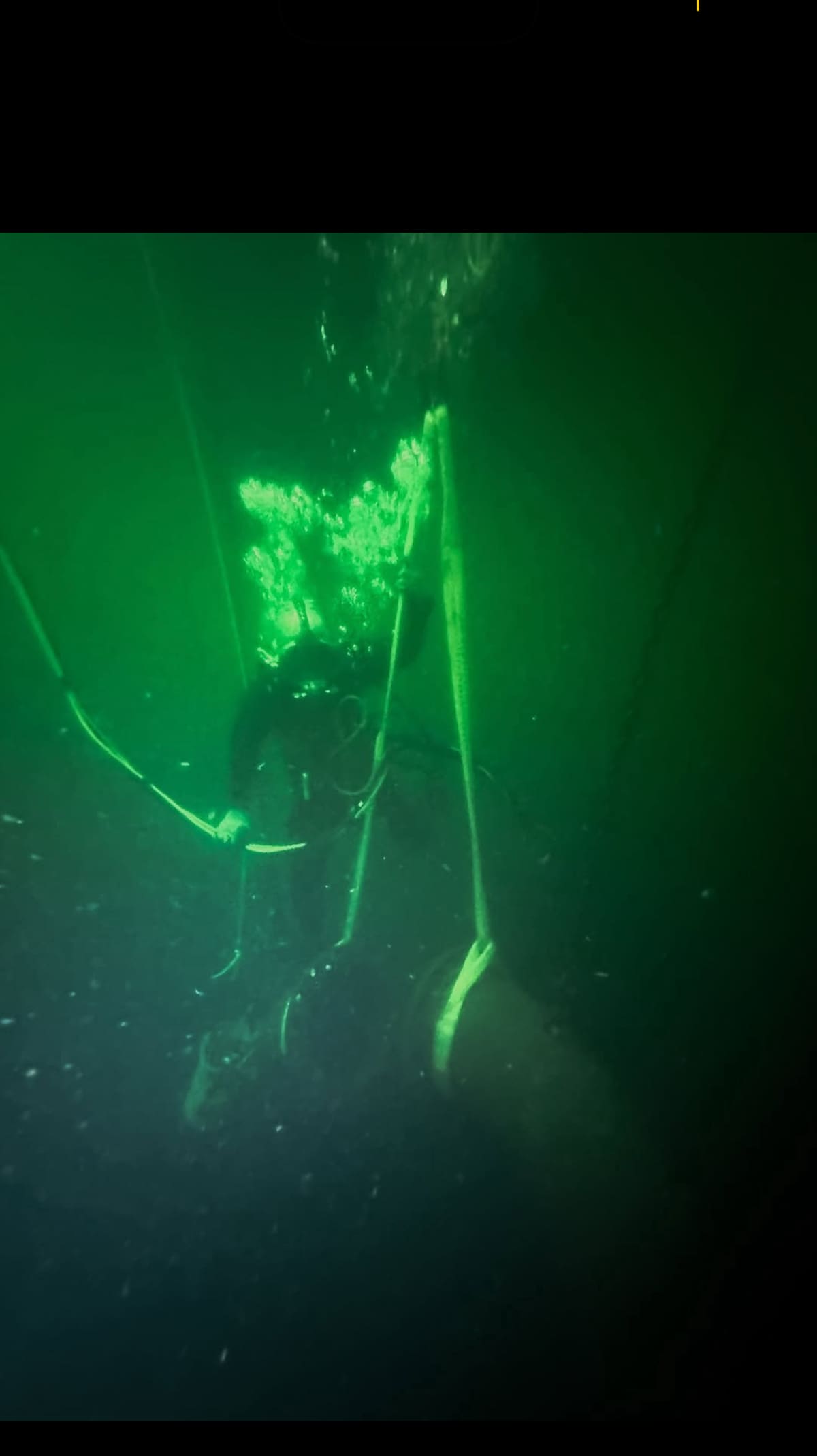
Instead of draining, a surface-supplied commercial diver enters the full tank through the hatch and vacuums the floor. The tank stays connected the whole time. Storage, pressure, and fire flow are never interrupted.
How it works
- Disinfection. Diver, suit, helmet, umbilical, and vacuum are washed with 200 ppm chlorine per AWWA C652.
- Survey. The diver records sediment depth on video before starting.
- Vacuuming. Slow, deliberate passes pull sediment into the vacuum, not the water column. Slurry pumps to a discharge point you approve.
- Verification. After footage of the clean floor.
- Report. Narrated video, photos, and a written summary.
Why it beats draining
Draining means dechlorinating and disposing of the full tank volume, days offline, then refilling, disinfecting, sampling, and waiting. A diver cleans the same tank in a day with only a few hundred gallons of slurry removed.
Clean and inspect together
Most systems ask for both in one visit. Cleaning first means the floor, welds, and coating are visible for the inspection. One mobilization, one report.
Tank types
Elevated tanks, standpipes, welded and bolted steel tanks, concrete reservoirs, and clearwells.
How often
AWWA guidance points to inspection every three to five years and cleaning as sediment builds. Utah sanitary surveys run every three years under R309-100. We recommend an interval after we see the tank.